AI Is Becoming The Expensive Option


AI was supposed to reduce development costs. In many cases, it has done the opposite. A growing number of startups, agencies, SaaS companies, and internal product teams are quietly spending more on AI tooling, token usage, automation layers, and prompt workflows than they would have spent solving the problem properly with a developer. Not because AI is useless. Because teams are using it inefficiently. The interesting shift happening in 2026 is that businesses are starting to realise AI is not automatically the cheaper option. Especially once products move beyond demos and into real production environments. There is now a visible pattern emerging across AI-powered apps, low-code platforms, internal tooling, and automation-heavy products: Companies save time initially, then slowly accumulate invisible operational costs everywhere else.
The “Cheap AI” Illusion
A lot of businesses still evaluate AI costs incorrectly. They compare: one developer day rate vs. one AI subscription That comparison is meaningless.The real comparison is: * Total implementation cost * Maintenance cost * Debugging time * Token usage * Retries * Hallucination handling * Infrastructure * API orchestration * Latency * Monitoring * Human QA * Fallback systems * Customer support impact This is where things start becoming expensive. Particularly in AI-first products where prompts continuously grow longer, contexts become bloated, and workflows become layered with increasingly complex API chains. A surprisingly large number of startups are now burning money through inefficient prompt architecture alone. Huge context windows. Repeated system prompts. Over-engineered agent chains. Recursive AI calls. Duplicate embeddings. Constant retries because outputs are inconsistent. At scale, these costs compound quickly.
Some Problems Never Needed AI
This is becoming one of the strongest opinions among experienced product teams. Not every workflow needs AI. Many products are adding LLMs to problems that were already solved reliably through traditional UX, search, filtering, rules-based systems, or structured automation. A good example is internal admin tooling. Teams sometimes build expensive AI copilots to help users navigate dashboards when the actual issue is poor information architecture. Or they generate AI summaries because the underlying content hierarchy is chaotic. Or they use AI categorisation because database structures were never designed properly. AI often gets introduced as a shortcut around weak product design. The irony is that businesses then spend ongoing token costs compensating for foundational UX or engineering problems that could have been solved once.
Token Costs Scale Faster Than Expected
One overlooked issue in AI product development is psychological distance from spending. Traditional infrastructure costs feel visible. Hiring feels visible. AI token usage often feels abstract. Until invoices arrive. This becomes especially dangerous in: * AI chat interfaces * AI-generated content platforms * Coding assistants * Document analysis tools * Customer support automation * AI-powered SaaS products * Multi-agent workflows A product that looks lightweight on the frontend may actually trigger dozens of expensive backend AI operations. And once users grow accustomed to AI-enhanced experiences, reducing usage becomes difficult without harming UX. This creates a trap. The business becomes dependent on recurring AI operational spend before validating whether the feature genuinely improves retention, conversion, or customer satisfaction.
Low-Code AI Products Are Magnifying The Problem
Low-code and no-code AI builders accelerated this trend massively. It is now easier than ever to connect: * LLM APIs * Vector databases * Automation workflows * AI agents * Third-party integrations * Generative UI systems That accessibility is powerful. But abstraction hides cost. Many founders now launch AI-powered MVPs without understanding: * Token optimisation * Caching strategies * Context efficiency * Inference routing * Model selection * Response streaming * Fallback architecture The result is often fragile systems with surprisingly high operating costs. Some products spend more generating AI summaries, recommendations, and categorisations than they make from the actual user interaction.
Developers Are Quietly Becoming More Valuable Again
One of the more interesting shifts happening in 2026 is that strong developers are becoming more commercially valuable, not less. Because experienced engineers know when not to use AI. That matters. A good developer can often replace expensive recurring AI operations with: * Deterministic logic * Structured workflows * Smarter databases * Caching * Search optimisation * Better UX * Lighter APIs * Proper system architecture Sometimes a well-designed filter system is more useful than an AI assistant. Sometimes a clean onboarding flow removes the need for AI guidance entirely. Sometimes strong content modelling eliminates the need for expensive summarisation. This is where mature product thinking starts separating from trend chasing.
AI Still Has Massive Value
None of this means businesses should avoid AI. Quite the opposite. AI is incredibly valuable when applied intentionally. The strongest AI products right now tend to focus on: * Acceleration * Augmentation * Workflow reduction * Pattern recognition * Accessibility * Content transformation * Repetitive operational tasks The best implementations feel almost invisible. They reduce friction quietly rather than forcing AI into every interaction. This is particularly true in fintech, SaaS platforms, customer support systems, internal operations, and developer tooling. The companies seeing the best ROI from AI are usually the ones combining: * Smart engineering * Strong UX * Selective AI usage * Efficient infrastructure * Human oversight * Scalable architecture Not simply maximising AI usage everywhere possible.
AI Hype Created A New Type Of Technical Debt
We are now seeing the rise of AI debt. Similar to technical debt, but operational. Products built rapidly around AI assumptions often become: * Expensive to maintain * Difficult to predict * Inconsistent in behaviour * Hard to scale * Difficult to QA * Vulnerable to API pricing changes * Dependent on external providers This becomes especially risky for startups building entirely around third-party AI APIs without fallback infrastructure. One pricing adjustment can suddenly change business viability. One model change can alter output quality overnight. One context limitation can break workflows across an entire product. AI introduces volatility into systems that many businesses still underestimate.
The Future Is Probably Hybrid
The future of AI-powered product development probably looks far less extreme than current hype cycles suggest. Not AI replacing developers. Not developers ignoring AI. Hybrid systems are emerging as the smarter middle ground. AI handles: * Acceleration * Drafting * Summarisation * Pattern recognition * Assistance * Accessibility enhancements * Repetitive operations Traditional engineering handles: * Reliability * Performance * Architecture * Security * Scalability * Predictability * Structured workflows That balance matters commercially. Because the companies winning with AI are increasingly the ones treating it as part of a broader product strategy, not the product strategy itself.
Businesses Are Starting To Ask Better Questions
The industry conversation is finally maturing. The question is no longer: “How do we add AI?” It is becoming: “Where does AI genuinely improve the experience enough to justify the operational cost?” That is a much healthier mindset. Especially as AI infrastructure costs continue scaling alongside user expectations. The businesses building sustainable AI products in 2026 are not necessarily the most experimental. They are usually the most disciplined. Careful architecture. Intentional UX. Controlled AI usage. Efficient systems. Strong engineering foundations. Because sometimes the most expensive developer is not a developer at all. It is an AI workflow nobody stopped to question.
Related Insights

·
4 min read
The AI Prototype Trap

·
3 min read
Why AI Agents Fail Without Product Structure

·
3 min read
No-Code Works… Until Systems Start to Scale
·
8 min read
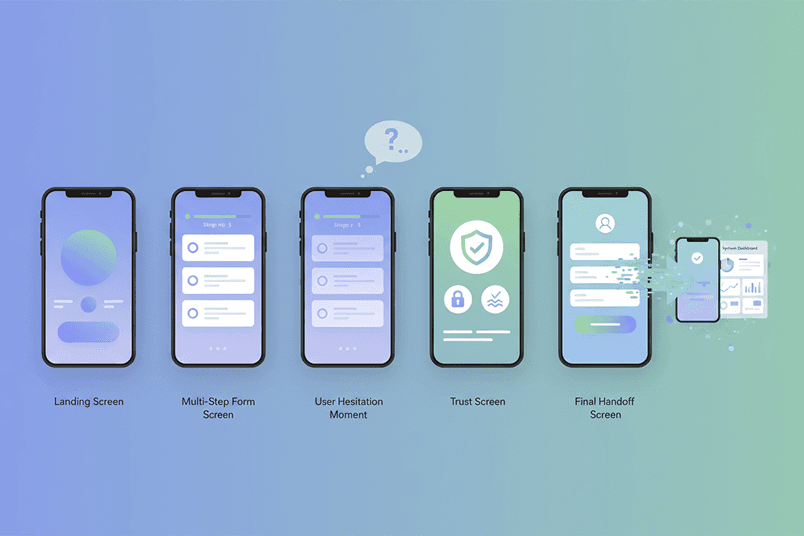
UX for Legal Claim Funnels
·
8 min read
Accessibility Is Product Quality
·
3 min read
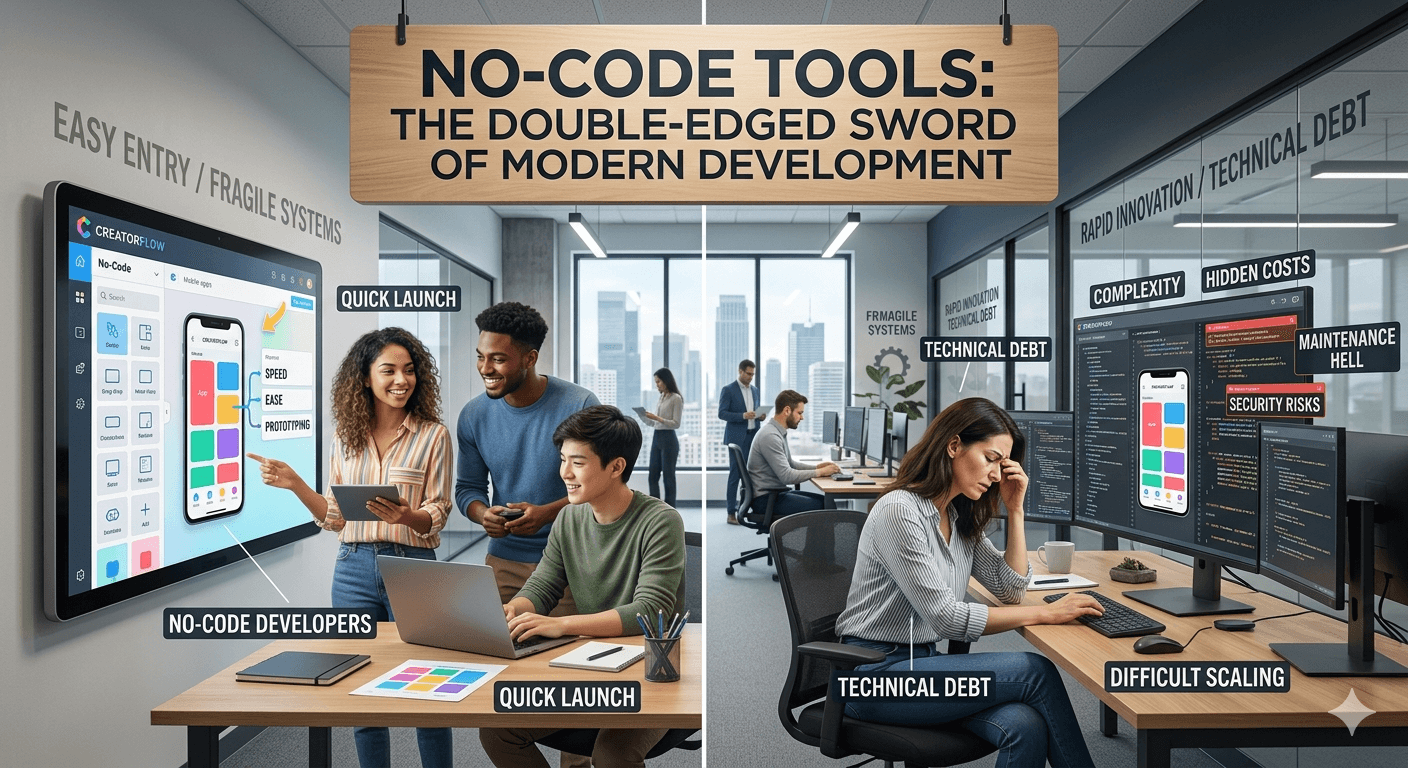
No-Code Tools: The Double-Edged Sword of Modern Development

·
3 min read
Claude Rides on SpaceX’s Cloud Infrastructure