Claude Rides on SpaceX’s Cloud Infrastructure
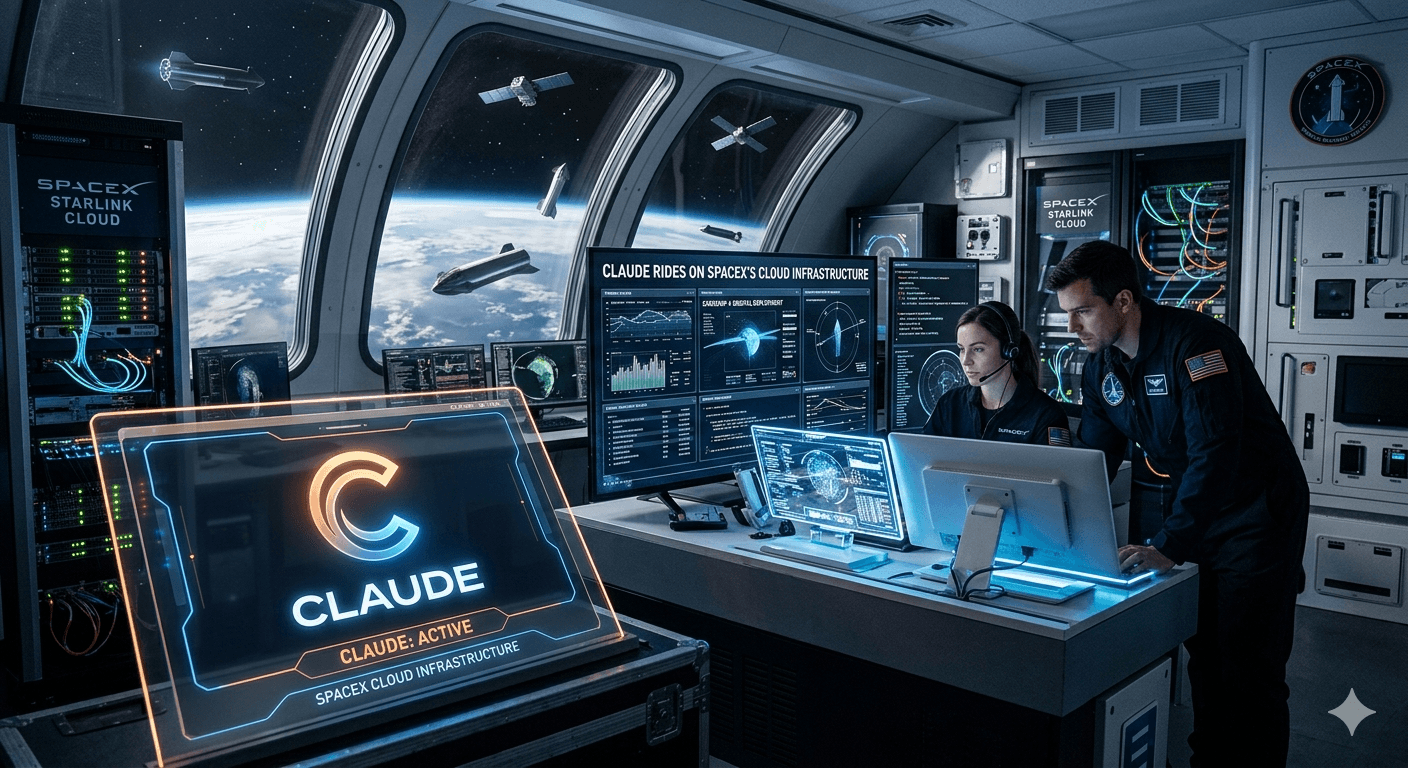

Anthropic Taps SpaceX Data Center to Boost Claude Capacity for Developers Anthropic is partnering with SpaceX to expand Claude’s computing capacity, addressing service bottlenecks that have frustrated users and developers. The move also aims to ease concerns over availability and cost. Ami Vora, Anthropic’s chief product officer, announced the updates during Code for Claude, a developer livestream event in San Francisco. “As of today, we are increasing rate limits for developers on Claude Code and the Claude Platform,” Vora said. “We’re doubling Claude Code’s five-hour rate limits for Pro, Max, Team, and enterprise seat-based plans, and significantly raising API limits for Claude Opus.” Anthropic is also removing the peak-hour throttling for Pro and Max Claude Code accounts. Vora attributed the increase in capacity to a collaboration with SpaceX, which allows Anthropic to tap “all the capacity of [SpaceX’s] Colossus 1 data center.” SpaceX describes Colossus 1 as housing more than 220,000 Nvidia GPUs, including dense deployments of H100, H200, and next-generation GB200 accelerators. The partnership is expected to add over 300 megawatts of new compute capacity within the month, joining similar arrangements Anthropic has with Amazon and Google/Broadcom. Looking further ahead, the company has expressed interest in developing “multiple gigawatts of orbital AI compute capacity” with SpaceX. Demand for Claude services has surged in recent months. Vora noted that API usage on the platform has increased nearly 17-fold year over year, and the average developer now spends 20 hours per week on Claude Code. This growth has coincided with a rise in model adoption, spurred by the popularity of OpenClaw’s long-running agents. Despite these gains, Anthropic has faced technical challenges, including occasional model bugs affecting performance. During the presentation, Vora clarified that no new Claude models were being announced. Instead, the focus was on highlighting recent and upcoming features, framing improvements in terms of exponential growth. “We’re doubling Claude’s five-hour rate limits,” Vora said. “Even though model capabilities are improving on an exponential, most organizations are still adopting AI on a linear path.” Vora acknowledged that the term “exponential” was more thematic than literal—model performance improvements have been incremental. For example, Opus 4.7 slightly outperforms Opus 4.6, but not dramatically. The presentation also showcased new features on Claude: Dreaming: Allows Claude to review past sessions, identify missed lessons, and self-update its memory. “Claude is actually able to self-learn,” explained Angela Jiang, head of product. Routines: Enables developers to schedule and trigger Claude jobs locally or in the cloud via webhooks or API calls. “A lot of my code nowadays is written by routines,” said Boris Cherny, head of Claude Code. “I’m not the one doing the prompting—I create routines that do it for me.” Other features highlighted included multi-agent orchestration and outcomes, which enhance Claude’s collaborative and goal-driven capabilities. With expanded capacity through SpaceX and new tools for developers, Anthropic is positioning Claude to handle growing demand while keeping users engaged with smarter, more autonomous AI workflows.